
Pathology is what we do. It's the only thing we do.
Voicebrook is privately held, headquartered in Roslyn Heights, New York. We were founded in 2002, but the thing that matters for this conversation is that we've been exclusively focused on anatomic pathology since 2009. We don't build for radiology, ambulatory documentation, or general clinical dictation.
That single-discipline focus is intentional, and it's what allows our platform, our implementation methodology, and our support model to be tuned to pathology workflows in ways broader vendors cannot match. Labs buy us once and stay, and our average customer relationship runs over nine years.
That focus shows up in what we build. VoiceOver PRO®, our flagship, is the reporting layer that sits above whatever speech engine and AP system a lab already runs. It delivers pathology-tuned reporting that makes sign-out faster and more accurate, without asking anyone to replace the tools they depend on. Alongside it, Accelera brings the same pathology-aware dictation in a lighter-weight package, and SynoptIQ® adds CAP synoptic cancer reporting. Three solutions, all built for the one discipline we serve.
To help patients get results.
Every report we help finalize is a patient waiting for an answer. That's why we measure our work in pathologist hours recovered, turnaround time reduced, signed-out reports reaching treating physicians faster and, equally important, report accuracy. No speech-alone tool can ensure a pathology report is accurate. Speech engines convert dictation to text, but they don't validate structured fields, catch incorrect staging, or verify that specimen counts line up. VoiceOver PRO is the layer that puts accuracy at sign-out. The pathology reporting workflow is what stands between a specimen on a slide and a patient getting their result. We exist to shorten that distance, and to make sure the result is right.
That premium on accuracy traces back to a real concern pathologists raised when the field moved from transcription to direct speech recognition: they gained speed but lost the second set of eyes their transcriptionists had always provided. The misrecognitions that pass cleanly through a speech engine are small on the page and large for the patient. A tumor measurement heard wrong (2.5 cm becomes 2.5 mm) is a factor-of-ten error that changes the stage, the prognosis, and the treatment that patient is offered. Laterality flipped from right to left is a wrong-side surgical decision built on a wrong-side report. A case number misrecognized attaches the report, and everything that follows from it, to the wrong patient's chart. And a single small word inverts the diagnosis, so the patient is told the opposite of what is true.
VoiceOver PRO is designed to surpass that lost review. Field-level validation, automatic CAP eCP completeness checks, auto-staging that flags inconsistencies, case-number reconciliation against the AP system, laterality checks, and specimen-count verification, all at sign-out, before the report reaches the treating physician and the patient waiting on it. The safety net pathologists used to depend on, made better.
“When my wife was diagnosed with breast cancer, our world changed overnight.
Like so many families, we suddenly found ourselves waiting — for appointments, biopsy results, answers, and a plan. And with every delay came more worry.
When we finally met with surgeons, one thing stood out. One doctor examined her and reassured us. The other spent more than an hour walking us through her pathology report — what the findings meant, what the percentages meant, and how they connected to her treatment options.
We chose the surgeon who explained the report.
Over the weeks that followed, those reports became essential. We used them to understand her diagnosis, ask better questions, weigh treatment options, and advocate for her care. Every detail mattered because the decisions we were making could affect the rest of her life.
That experience changed the way I saw Voicebrook’s work.
I recognized the names of the pathologists on her reports and the health systems where they worked. They were organizations using our software. Our work was right there in my family’s care.
Until then, Voicebrook’s purpose had focused primarily on helping pathologists save time and improve efficiency. But in that moment, I understood something much bigger:
The pathologist isn’t the end of the story. The patient is.
A faster, more accurate pathology report means more than improved workflow. It can mean a patient gets answers sooner. A family spends one less day worrying. A physician has better information to guide an important decision.
Soon after my wife’s surgery, I shared her story with our team. It helped us articulate the purpose that still guides Voicebrook today:
Helping patients get results.
I’m incredibly grateful to say that my wife is doing well today. And since her diagnosis, this work has never meant quite the same thing to me — or to our team.
Every report matters because there is a patient and a family waiting on the other end of it.”
Read Ross’s full story Hide the full story
"When my wife was diagnosed with breast cancer, our world changed overnight. We had a young family at the time, so the worry didn't stop with us. We went through the normal what-ifs any family in that situation does.
It started with a lump she found. Then a mammogram. Then waiting to get a biopsy scheduled. Then more waiting after the biopsy, by the phone, just worrying. When the call finally came, our hearts dropped. We didn't know what to say to each other. For her, the worry was about our kids. For me, it was about her and our kids.
What followed was planning while paralyzed. We needed to find a doctor, and we had no idea where to start. The most highly recommended one told us the soonest appointment was three weeks out. I called directly and asked if there was anything they could do; they told me to check in daily. We lined up backups who could see her the following day. The next morning the top doctor's office emailed. They could fit her in for Friday.

We met with two surgeons that day. The first one: forty minutes. A physical exam. The line I'll never forget: 'You are going to be with us for a long time.' The second one: an hour and a half. She walked us through the report. What the receptors meant. What the staging implied. What the treatment options actually were, and how they connected to the findings.
We chose the surgeon who explained the report.
Even with the right surgeon, we needed to understand the reports ourselves. Six weeks of trying to make active decisions: surgery, and to what extent. Chemo, or not. What the percentages actually meant. Every one of these calls could mean the difference between life and death, or years of prolonged sickness, for the person I love most. And we were making them off of reports.
In her case, the difference in outcomes between chemo and no chemo was one to two percent, but had she been five years older, the difference would have been non-existent. We asked about alternatives. Her doctor agreed with our decision. The protocol has since been updated to match what we chose at the time, working from the reports.
Through all of it, I couldn't help but worry that every day that passed could mean tumor growth or metastasis. One time the results came back on a Friday. We could see them, but we had to wait the entire weekend to get clarity on what they meant, then wait again to work out next steps with our doctor. More worry, more waiting. And it didn't end with the diagnosis, or even the surgery. Some test results were still pending more than seventy days in.
And life didn't pause. School, soccer, lacrosse, drama club, voice lessons, my wife volunteering, me coaching. We had to make it all work, and decide when to tell our kids, our friends, our family, all while waiting for answers.
What made informed advocacy possible was the reports. Without that level of detail, the doctor's recommendation would have been the only voice in the room. With it, we could ask informed questions, weigh the percentages ourselves, and request alternatives. Every detail of every report helped guide us to the right decision.
At some point (and the timing could not have been more inconvenient, since I was in the middle of preparing for our annual company meeting), I started looking at her reports differently. Not just as a patient's spouse, but as someone who knew what went into them. I recognized the pathologists' names. They were working at health systems where we had deployed our software: Northwell, Catholic Health Services of Long Island. Our work was right there in my family's care. And the same thing is true, right now, for our employees' families and friends across the country.
It was in that same stretch that I realized our core purpose had been too narrow and specific. At the time, it read: 'To empower Pathologists to Save Time, Money, and Lives.' Sitting with it then, in the middle of everything, I could feel how wrong that framing was: too much about the head, not enough about the heart.
The pathologist isn't the end of the story. The patient is.
We needed to re-articulate around the person on the other end of the report: help patients get results. Both kinds of results: the timing of when the report arrives, and the accuracy of what's in it. Quicker turnaround plus more accurate reports means better outcomes for the patient.
A couple of weeks after my wife had surgery, we had our annual company meeting. I shared the whole experience with the Voicebrook team: a deck walking through every report, every feeling, every next step, so they could connect to why this mattered. Tears were shed. Other employees shared their own stories about cases that had touched their own families. That meeting was the breakthrough where we finally understood our 'why.' Every improvement we make to the software, every day we shave off a report, is potentially an extra day of worry someone doesn't have to live through.
I couldn't be happier to tell you that my wife is well today. The experience changed both of us. She channeled it into coaching and mentoring other patients going through the process. She just completed her yoga instructor training and is now certified in women's health and wellness, with the intention of nurturing the body, mind, and spirit of women facing their own diagnosis and recovery.
And since that experience, this work has never meant anything else, not for me, not for our team. Helping patients get results. That's the work."
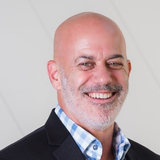 Ross Weinstein
CEO & Co-founder, Voicebrook
Ross Weinstein
CEO & Co-founder, Voicebrook
That breakthrough shapes every decision Voicebrook makes. When a pathologist is frustrated with us because something isn't working the way they need it to, we know it's coming from a good place: they care deeply about helping their patients, and they carry that responsibility every day. They're not just pathologists or customers; they're people helping other people , and we exist to empower them to do that work.
When pathologists make requests that other vendors would call "out of scope," we ask a different question: is what they're asking for grounded in helping patients get results? If it is, we work with them to find a solution.
Built for pathology by people who only do pathology.
Voicebrook is privately held, headquartered in New York. Founded in 2002, exclusively focused on anatomic pathology since 2009. Labs buy us once and stay, and our average customer relationship is over nine years.
More than 4.6 million reports a year are 4.6 million people waiting on an answer. Every pathologist hour we recover is a report that signs out faster, a treating physician who gets the answer sooner, and a patient who doesn't sit waiting.
What we build here, real labs feel on Monday morning. So do their patients.
Verified, certified, and partnered.
Epic Showroom
Voicebrook is listed in the Epic Showroom for Pathology Speech Recognition & Reporting. Epic has validated our Beaker integration meets their standards. For labs running Beaker as the system of record, this validation matters.
CAP relationship
Voicebrook has been a licensed vendor of CAP electronic Cancer Protocol (eCP) content since 2010, incorporated into VoiceOver PRO and delivered as the SynoptIQ add-on. We were one of the first to ship a CAP-approved synoptic reporting tool, and produce eCP HL7 output for cancer registries.
HITRUST certified, HIPAA-compliant
Data encrypted in transit and at rest. Hosted in a HITRUST-certified Microsoft Azure environment.
Onshore, insourced delivery
All implementation, training, professional services, and support are performed by Voicebrook employees based in the United States. No outsourced helpdesks, no offshore implementation partners, no third-party professional services firms.
Built for serious pathology operations.
Voicebrook deploys across every kind of pathology environment, from community hospitals to multi-site IDNs, NCI-designated cancer centers to federal healthcare networks.
Integrated Delivery Networks
Multi-hospital health systems with centralized pathology operations.
Academic Medical Centers
Large teaching hospitals with residents, fellows, and complex case mixes.
NCI-Designated Cancer Centers
High-volume oncology pathology with strict CAP cancer protocol compliance.
Federal Healthcare Systems
Multi-site federal pathology networks with standardization requirements.
See the hours come back.
30-minute walkthrough with a pathology-informatics specialist: dictating real cases, with your AP/LIS in the loop. You'll see where your time goes today, and where it comes back once Voicebrook clears the friction.
Why this matters: every report that signs out faster is a patient getting their result sooner.